

Gynecomastia Surgery/Male Breast Reduction in Nashville, TN, with Dr. Cash
Gynecomastia surgery, or male breast reduction, is plastic surgery to reduce the size of overly large male breasts to give a more masculine look to your upper body and alleviate discomfort.
To learn more about male breast reduction in Nashville, TN, and how it might benefit you, contact Nashville Plastic Surgery today to schedule a consultation with Michael Cash, M.D. Dr. Cash has attained double certification from the American Board of Plastic Surgery and the American Board of Surgery. He has the training and expertise to perform complex reconstructive surgery and customized cosmetic procedures with remarkably natural-looking results.
What Is Gynecomastia?
Gynecomastia is a condition in which male breasts become enlarged. It can develop at any age, even before puberty, and become more extreme as a result of hormone changes, weight gain, or the use of certain medications.
Sometimes gynecomastia has a genetic component, as some men are more prone to developing the condition than others. Breasts often develop asymmetrically, leading to unilateral gynecomastia (one side) or bilateral gynecomastia (both sides).
Mild cases caused by excess weight may be improved with diet and exercise. Other cases may require surgery to restore masculine contours to the chest. Gynecomastia caused by medication can sometimes be corrected by working with the doctor to find a different and equally effective medication.
Gynecomastia can make you feel self-conscious and embarrassed about your body. It can lead you to avoid activities you enjoy, like swimming or going to the beach. It can make you reluctant to open yourself to intimacy. Many patients seek surgical solutions after struggling with the emotional toll for years.
What Causes Gynecomastia?
Gynecomastia is far more common than many people realize. It occurs when excess glandular breast tissue develops in one or both breasts, creating a fuller, more feminine-looking chest. It can affect males of all ages, from prepubescent boys to older adults.
Gynecomastia develops when there is an imbalance between estrogen and androgen activity in the body. Several factors can cause this condition or contribute to its development.
- Hormonal changes: Fluctuations in testosterone production and estrogen excess are among the most common causes of gynecomastia. During puberty, hormonal imbalance often triggers pubertal gynecomastia, which is frequently transient and resolves on its own. Adolescent gynecomastia that persists beyond two years is less likely to resolve without treatment.
- Hormonal conditions: Primary or secondary hypogonadism, Klinefelter syndrome, and dysfunction of the pituitary gland, adrenal glands, or luteinizing hormone regulation can disrupt testosterone levels and sex hormone binding globulin in ways that promote breast tissue growth.
- Medical conditions: Chronic liver disease, liver failure, testicular tumors, and prostate cancer can co-occur with gynecomastia. Prostate cancer patients treated with specific hormone therapies are particularly susceptible. Male breast cancer is a rare condition that sometimes mimics gynecomastia, which is why a proper medical evaluation is essential.
- Medications: Drug-induced gynecomastia is well documented. Medications used to treat prostate cancer, heart conditions, and psychiatric disorders can cause breast tissue growth. Anabolic steroids are also a recognized cause of gynecomastia in men.
- Recreational drug use: Steroids, cannabis, and other substances can disrupt androgen receptors and free testosterone levels, triggering breast enlargement in men.
- Weight gain: Excess fat deposits in the chest area can enlarge breasts in men. However, true gynecomastia involves the growth of glandular breast tissue, not just excess fat, and does not respond to diet and exercise.
- Idiopathic gynecomastia: Sometimes, there is no identifiable underlying medical cause, medication, or specific hormonal condition. Idiopathic gynecomastia is harmless, but can still be embarrassing to live with.
What Is Gynecomastia Surgery or Male Breast Reduction?
The most effective treatment for significant gynecomastia is surgery to reduce the amount of fat and glandular tissue and restore a flatter, more masculine chest contour.
- Liposuction: Sometimes removing excess fat is enough to create the desired results. Dr. Cash may perform liposuction to excise localized fat deposits through tiny incisions. This approach is most effective when gynecomastia is primarily fat-related.
- Tissue excision: Surgically removing excess breast tissue is often the best solution. Specialized techniques allow Dr. Cash to precisely remove excess glandular tissue and achieve a natural chest contour.
- Skin removal: Where enlarged breasts have sagged or excess skin has developed, surgery can lift and tighten the skin and reduce the size of the areolas.
- Combined approach: In many cases, the male breast reduction procedure involves both liposuction and tissue excision to fully correct gynecomastia and achieve the best chest contour.
Why Might I Consider the Best Gynecomastia Surgery in Nashville, TN?
You might choose to have male breast reduction to:
- Restore a masculine look to your chest
- Eliminate self-consciousness and embarrassment about your appearance
- Free yourself to engage in activities where men typically remove their shirts, such as swimming
- Relieve discomfort of enlarged breasts, especially when engaged in active exercise or sports
- Have more clothing choices and wear the clothes you prefer
- Correct breast asymmetry, including unilateral or bilateral gynecomastia
- Feel proud of your body and better about yourself
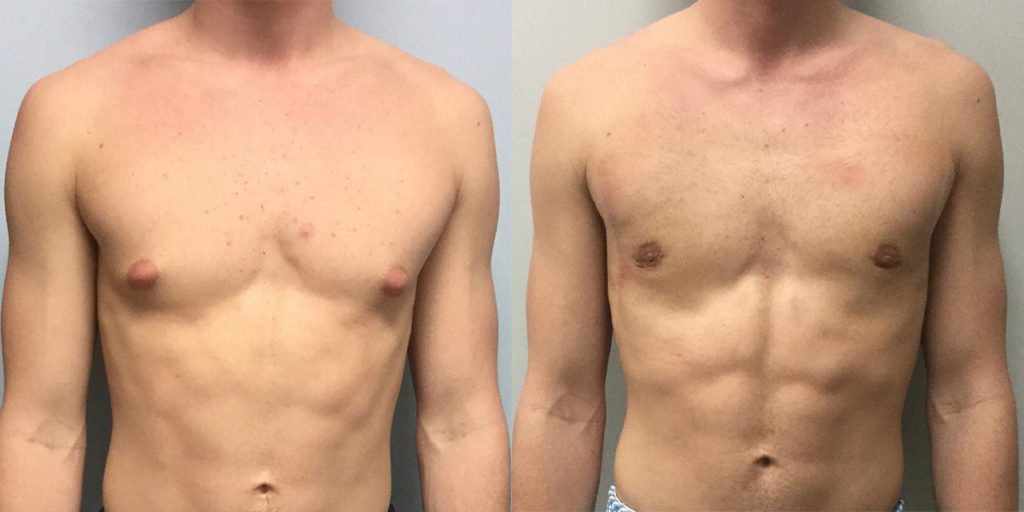
View our male breast reduction before-and-after photo gallery to see the improvements Dr. Cash has helped his patients realize.
Why Choose Dr. Cash for Male Breast Reduction Surgery?
Your choice of male breast reduction surgeon is the paramount decision you’ll make in the process. Ample experience with this procedure is crucial. Always choose a surgeon who is board-certified through the American Board of Plastic Surgery — the only valid board certification for plastic surgeons. Dr. Cash has earned certification from the ABPS and the American Board of Surgery.
Dr. Cash has earned a stellar reputation among Middle Tennessee plastic surgeons for his ability to correct gynecomastia with natural-looking, lasting results. He tailors every male breast reduction procedure to each patient’s unique anatomy and goals. As one of the best male breast reduction surgeons in Nashville, Dr. Cash will spend time with you to understand the results you hope to achieve. He’ll explain what you should realistically expect, plus the risks and costs, and he treats every patient with respect and attention.
Am I a Good Candidate for Gynecomastia Surgery?

Gynecomastia surgery is appropriate for male patients of many ages, from adolescents whose breast tissue has stabilized after puberty to older adults.
Dr. Cash can tell you if you are a good candidate for male breast reduction in your consultation. You may be a good candidate for the procedure if you:
- Are embarrassed about your appearance because of your breasts
- Are bothered by limits on your activity because of your breasts
- Experience physical discomfort from enlarged breasts
- Have two differently sized breasts
- Are in generally good health
- Are able to maintain a healthy, stable weight
- Do not smoke, or are willing to quit for several weeks before and after the procedure
If you are overweight and plan to lose weight through diet and exercise, discuss this in your consultation with Dr. Cash. He may recommend that you postpone the surgery until you are closer to your ideal BMI for better long-term results.
Planning Your Male Breast Reduction
Your breast reduction procedure at Nashville Plastic Surgery starts with a consultation with Dr. Cash. He will examine you, ask questions to learn your medical history and understand your goals for the procedure, listen to your concerns, and answer your questions.
When he has a full understanding of your wishes, he will recommend a surgical approach that will give you the results you want with the least risk. He will describe what the procedure entails, its risks and cost, and what you can expect in recovery as you heal from the surgery.
Dr. Cash’s goal in every cosmetic procedure is to produce the most attractive and natural-looking results with the least discomfort and lowest level of risk for the patient.

At Nashville Plastic Surgery, our mission is to treat you with the utmost respect, help you make an educated decision, and provide you with the finest medical services in a safe and professional environment.
Dr. Cash, our board-certified plastic surgeon, specializes in breast augmentation, tummy tuck, liposuction, and more. Schedule a consultation today to learn more!

What Does Male Breast Reduction Surgery Involve?
Dr. Cash performs gynecomastia surgery on patients who are under general anesthesia.
- Liposuction: Cash will make small incisions in the target area and use a thin tube called a cannula to break up the excess fat and suction it out.
- Tissue excision: Cash removes excess glandular tissue and skin to improve chest contours.
- Combined approach: In many cases, the best gynecomastia surgery results come from pairing liposuction with tissue excision techniques.
Male breast reduction surgery usually takes about two hours. When the anesthesia has worn off and you are fully alert, you can go home. You’ll need a friend or family member to drive you and stay with you for the first night.
What to Expect in Recovery
You’ll need some time for rest and recovery at home after your surgery and should plan to take a week off from work, longer if your job involves physical exertion. You may experience some discomfort in the first few days, which you can manage with pain medication. You may also have some swelling and bruising, which will gradually resolve as your tissue heals. Drains may be placed, and you may be supplied with a compression garment to control swelling and promote healing.
Dr. Cash will provide you with detailed instructions on how to take care of yourself as you recover, when to see him for follow-up appointments, and how to reach him with any concerns. You can resume low-impact activities and exercise after about two weeks, gradually building up to your typical activity level by about six weeks after surgery.
Schedule Your Nashville Male Breast Reduction Consultation Today
Contact Nashville Plastic Surgery online or by calling (615) 454-2271 to schedule a consultation for male breast reduction with Dr. Cash. He will examine you, ask questions to understand your goals for the procedure, and recommend the best and safest approach. Patients in metro Nashville and throughout Middle Tennessee choose Dr. Cash as their cosmetic surgeon because of his ability to create stunning results and the caring attention he and his staff provide.
Frequently Asked Questions About Male Breast Reduction
Yes, but the scars will be concealed in the natural contours of your breasts. The scars will be most noticeable for the first few months, after which they gradually fade to match the color of your skin. Dr. Cash aims to reduce scarring for every patient, including those with darker skin tones, who may be at higher risk of visible scarring or keloid formation. He will discuss your skin type and scarring risks during your consultation.
Like most cosmetic surgery, breast reduction is generally considered elective and thus is not covered by most health insurance providers. The costs for your breast reduction will depend on the procedure used and where the operation is performed. We will explain the costs clearly and answer any questions you may have. We want all of our patients to be fully informed before they choose to have cosmetic surgery.
Gynecomastia surgery can improve a more masculine chest contour, enhance self-confidence, and alleviate physical discomfort associated with enlarged male breast tissue.
Discomfort during recovery is normal, but Dr. Cash will prescribe pain medication to manage any discomfort. Most patients find the discomfort to be manageable and temporary.
While initial results may be visible shortly after surgery, final results typically emerge as swelling subsides and tissues heal within a few months.
As with any surgical procedure, risks and complications may include infection, bleeding, changes in sensation, asymmetry, or dissatisfaction with results. Dr. Cash will discuss these risks during your consultation.
In most cases, the results of gynecomastia surgery are permanent. However, significant weight gain, hormonal imbalance, or certain medical conditions may cause a recurrence of breast enlargement. Male patients who use anabolic steroids after surgery are at elevated risk of developing gynecomastia again.
Most patients can return to work and light activities within a week of surgery; however, strenuous exercise and heavy lifting are typically restricted for several weeks. Dr. Cash will provide specific guidelines based on your recovery process.
In most cases, gynecomastia surgery is considered a cosmetic procedure and is not covered by insurance. However, coverage may be available if the condition is causing significant physical discomfort or impairment. Our team can assist you in determining your insurance coverage and financing options.
Yes, wearing a compression garment is typically recommended after gynecomastia surgery to minimize swelling, support the new contours, and promote optimal healing. Dr. Cash will provide specific instructions on garment wear and best aftercare practices.
Follow-up appointments are usually scheduled within the first week after surgery to monitor your progress, remove sutures or drains, and address concerns. Additional follow-up appointments will be scheduled to ensure your recovery is progressing smoothly.
Certain medications, such as blood thinners and herbal supplements, may need to be temporarily discontinued before surgery to reduce the risk of bleeding and complications. Dr. Cash will provide specific instructions based on your medical history and current medications.
Gynecomastia surgery is typically recommended for males who have completed puberty and whose breast development has stabilized. However, there is no strict age limit for the procedure, and suitability will be assessed individually during your consultation with Dr. Cash.
The most common cause is hormonal — specifically, an imbalance between estrogen and testosterone that promotes breast tissue growth. Conditions that affect testosterone production, such as primary or secondary hypogonadism, testicular tumors, or Klinefelter syndrome, can also cause gynecomastia.
Additionally, dysfunction of the pituitary gland or adrenal glands, abnormal levels of sex hormone binding globulin, or estrogen excess can trigger breast enlargement in men.
Drug-induced gynecomastia results from using medications, anabolic steroids, and some recreational substances. Chronic liver disease, including liver failure, can impair hormone metabolism and cause men to develop gynecomastia. Prostate cancer patients receiving hormone therapy are also at higher risk for breast tissue changes.
Most cases of breast enlargement in men are benign, but any unusual symptoms are cause for concern. Though male breast cancer accounts for less than 1% of cases diagnosed in the U.S., men with enlarged breasts should still seek a proper medical evaluation — particularly if symptoms appear suddenly, occur only in one breast, or occur alongside nipple discharge, breast pain, or a firm lump.
Bilateral gynecomastia affects both breasts, while unilateral gynecomastia affects only one. When gynecomastia causes noticeable asymmetry, Dr. Cash will customize the male breast reduction procedure to address each side individually, ensuring a balanced and natural-looking chest contour.
Pubertal gynecomastia and adolescent gynecomastia are prevalent during the teen years due to normal hormonal fluctuations. Transient gynecomastia in teens often resolves on its own within six months to two years as hormone levels stabilize. However, prepubertal gynecomastia or gynecomastia that persists well into late adolescence is less likely to resolve without treatment. In those cases, male breast reduction surgery may be the most effective option to correct gynecomastia and restore a more masculine chest contour.